
In our discussion of the way that the Daily Office shapes and forms us as a people of prayer, we come now to the prayer that embodies this dynamic more clearly than anything else. The Lord’s Prayer, the beginning of the section of the Daily Office focused on our prayers and petitions, is a microcosm of this entire project—what we pray shapes what we believe, which shapes who we are and how we live.
When we pray this prayer of our Lord, we are becoming more and more like our Lord.
The Lord’s Prayer is both a model for prayer, and a liturgy of prayer. Look at how the two Gospel writers introduce this prayer. In Matthew’s version (Matt. 6:9), Jesus says, “Pray then like this…”, indicating that this prayer might be a model, a guide or template for us to use in our own prayer lives. Use the structure, the form, the petitionary aims of this prayer to guide your own prayer life.
But in Luke’s recording (Luke 11:2), Jesus says, “When you pray, say….”, which seems to suggest that this is a liturgy—we are to say these words as He has given them. These are the words Jesus has given to lay out how AND what we should pray; both model, and liturgy.
All this to say, I believe it is good for us to make the Lord’s Prayer a daily liturgy for our prayer lives, but also to learn from it as a guide that is leading us into a deeper life of our own prayers. Because this prayer is holy, words inspired by God prayed to God. It is a glimpse of the heart of God, the Son communicating to the Father. When we pray His words, we are becoming more and more like Jesus.
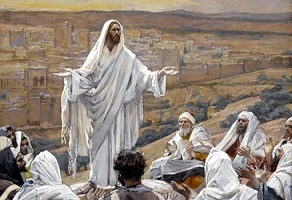
And Jesus doesn’t just give us these words and set us off to do them on our own—He prays with us. That is the brilliant good news of those first two words, “Our Father.” Jesus is coming alongside us, turning our hearts and minds toward God, inviting us to address God in the same way He does, and praying with us, “Our Father, who art in heaven…” When we pray this prayer, Jesus is always praying it with us, and we are united with Jesus in his prayers. The Lord’s prayer, is now our prayer.
What a joy—we are praying with Jesus, uniting ourselves to Him and becoming more like Him through this prayer. When He teaches us to pray, as the disciples asked Him to, He gets right in there with us and patiently leads us to the heart of the Father who loves us, is predisposed to hear us, and always desires to bless us.
For the sake of space and time, I will not be reflecting on each petition at length, but rather to give some quick hits as I meditate on this prayer, while I encourage you to take more time to meditate on these in your own time.
Hallowed be thy name. God’s name is holy, and in our prayers, we acknowledge and praise Him in that. His very name is powerful and sacred, the Name above every name, at which the demons shudder and the earth quakes. And even still, we can call Him “Father.”
Thy Kingdom come, Thy will be done. A petition that is at the same time a surrender. When I pray “Thy will be done,” I’m necessarily saying, “Not my will, but yours.” God’s Kingdom is perfect and holy and full of peace and goodness, and we desire to see that here on earth, too.
Give us this day our daily bread. In God is everything that we need, for our bodies and our souls. He is the source and provider of all our needs, and what we need the most is Him. He is the manna from heaven, He is the Word that is more essential to us than bread, He is the bread of life, broken for us. Give us Yourself, and we will find in You all that our lives long for. We seek His Kingdom, and all these other things will be added unto us.
Forgive us our trespasses, as we forgive those who trespass against us. Forgiveness is what our souls most need to be right with God, and it is always a gift we must ask for, and which our heavenly Father delights to give. It also shows us, and shapes us, that forgiven people must forgive people (see last Sunday’s sermon). We put ourselves to the test with this prayer each day—as I surely will forgive others who sin against me, please forgive me again today.
Lead us not into temptation, but deliver us from evil. This should be seen as one petition in two parts, negative and positive, entrusting that it is God who is leading us—lead us not in the direction of temptation, but deliver us from all the working of the evil one. This, too, is an acknowledgment of our need for God’s rescue and constant direction.
For thine is the Kingdom…. This doxology that the ancient church added on to the prayer is a fitting word of praise and holy worship offered up to our Father. Our hearts have been lifted up to Him in humble praise, petition, and submission, and it is good and right to close with praise.
In the Lord’s Prayer, Jesus Himself prays with us and helps to posture our heart rightly before the Father. To know Him as a Father who loves us, the Sovereign King who rules over us, the Creator and Sustainer and Provider, the merciful Savior, and the Lord who directs our lives toward His good ends.
When we pray it, daily and with our hearts joined to it, this prayer will shape us more and more to be the children of our heavenly Father. To be like Jesus, which is what He is aiming for as He teaches us to pray.
For Your Reflection
- Take some time today, and this week, to slow down and reflect on each of the petitions of the Lord’s Prayer, one at a time, maybe one per day. Sit with them and ask the Holy Spirit to lead your thinking and stir in you deeper prayer through this.
- As you pray this prayer, do so in the knowledge that Jesus is praying with you. Envision Him beside you as your brother, directing your words, your heart, and your mind, toward our good Father.
Our Father, who art in heaven, hallowed by Thy name, Thy Kingdom come, Thy will be done on earth as it is in heaven. Give us this day our daily bread. And forgive us our trespasses, as we forgive those who trespass against us. Lead us not into temptation, but deliver us from evil. For Thine is the Kingdom, the power, and the glory, for ever and ever. Amen.